


Benefits of Hydration: Could You Be Drinking Too Little?

Hydration feels almost too simple to talk about. We all drink. We get thirsty. We make cups of tea. We carry water bottles around. Surely, if we weren't drinking enough, our bodies would simply tell us?
I've even heard people, including medical professionals question our modern obsession with water bottles: “We didn't walk around carrying enormous bottles of water when we were younger. Why does everyone need one now?” And there's some truth hidden in that. We don't need to spend our lives anxiously monitoring every millilitre we drink, and more water isn't automatically better. But in clinic, I increasingly think we underestimate how many people simply aren't consistently well hydrated.
When I actually ask clients how much they're drinking, rather than whether they think they drink enough, the answer can be surprisingly revealing. A coffee in the morning, a couple of cups of tea, perhaps a glass of water with lunch... and suddenly it's late afternoon. Hydration is one of those basic foundations of health that is remarkably easy to overlook while we're searching for something much more complicated. And the research suggests that it matters.
Your brain will benefit from surprisingly small changes
You don't necessarily need to be dramatically dehydrated before you feel different. In a controlled study of healthy young women, an average fluid loss of only around 1.4% of body weight was associated with increased headaches and fatigue, poorer concentration, lower perceived vigour and greater perceived difficulty completing tasks. Interestingly, most objective cognitive tests weren't significantly impaired — in other words, people could still function, but functioning felt harder. That distinction fascinates me clinically.
It's the person who isn't technically ill but says:
"I feel foggy."
"I've got a vague headache."
"Everything feels like an effort today."
"I just don't feel quite right."
Hydration certainly isn't the explanation for every headache or episode of fatigue, but it's such a simple variable that I think it's worth considering before looking for more complicated explanations. Other controlled studies have also found changes in aspects of attention, memory, judgement and mood following water restriction and subsequent rehydration, although effects aren't completely consistent across every cognitive measure.
THE 7-DAY HYDRATION EXPERIMENTWe often think we're drinking enough. But do we actually know? For the next seven days, make hydration a conscious experiment rather than another health rule. 1. Notice your starting point. For the first day, simply observe roughly how much you're drinking. I used myfitnesspal to track my intake. 2. Create a rhythm. Rather than drinking huge amounts at once, have fluids regularly throughout the day. 3. Keep water visible. Use a bottle or jug so you can actually see what you're consuming. 4. Drink more when your body needs more. Exercise, hot weather, illness and heavy sweating all increase fluid requirements. 5. Pay attention to your body. Notice whether anything changes in your: ✓ headaches ✓ afternoon energy ✓ concentration and brain fog ✓ mood ✓ bowel movements ✓ appetite ✓ exercise performance ✓ urine colour You're not looking for perfection. You're simply asking: “Do I feel any different when I'm consistently well hydrated?” Sometimes the simplest experiments teach us the most. |
Your heart has to work harder when you're dehydrated

Water makes up a substantial proportion of blood plasma. As we lose fluid, plasma volume can fall and the cardiovascular system has to work harder to maintain circulation and regulate body temperature. This becomes particularly noticeable during exercise and in hot conditions. Research consistently shows that dehydration during prolonged exercise — particularly once losses approach around 2% of body weight — increases cardiovascular and thermoregulatory strain and can impair physical performance.
A 2023 systematic review looking at hydration before exercise found that strategies increasing hydration and plasma volume could reduce heart rate and core temperature during prolonged exercise and, in some circumstances, improve exercise capacity. So sometimes that workout feeling unusually difficult isn't necessarily a fitness problem. You might simply have turned up under-hydrated.
🧂 DO I NEED ELECTROLYTES?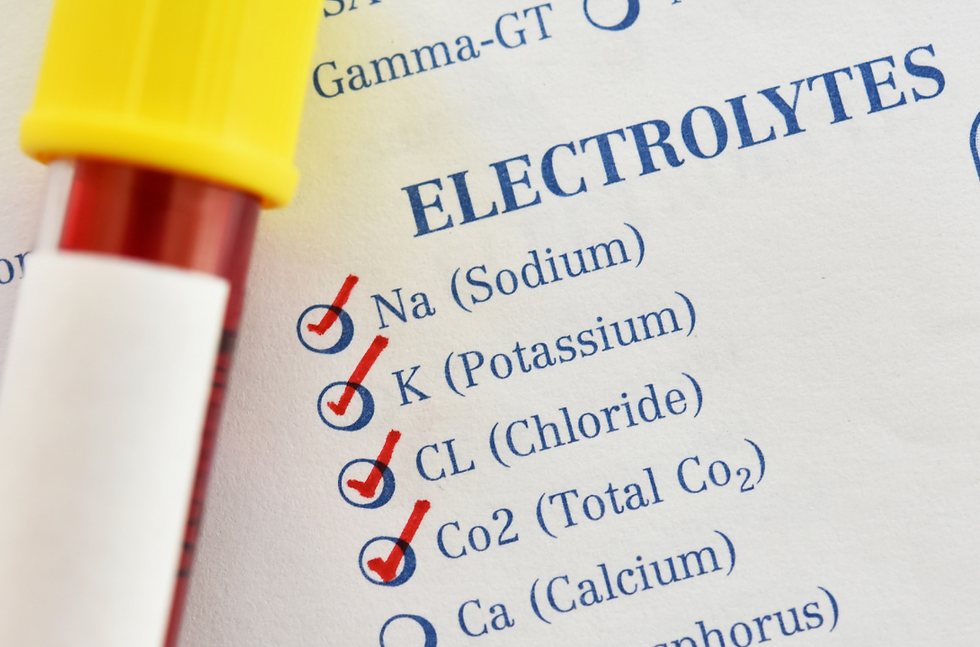 For most people going about an ordinary day, water and a varied diet provide everything needed to maintain fluid and electrolyte balance. But electrolytes can become useful when you're losing significant amounts of fluid and salts, for example:
For shorter or less strenuous exercise, plain water will usually do the job perfectly well. And remember that more isn't necessarily better. Drinking excessive amounts of fluid — particularly large quantities of plain water in a short period — can disturb the body's sodium balance. Think replace what you've lost, rather than automatically adding electrolytes to every drink. |
Your gut needs hydration too
This one needs a little nuance. Simply drinking litres of extra water isn't a treatment for constipation if you're already adequately hydrated. But insufficient fluid intake can certainly contribute to harder, less frequent stools, and adequate fluid becomes particularly important when we're increasing dietary fibre.
In one randomised study of people with chronic functional constipation, everyone ate approximately 25g of fibre a day. Those who also increased their fluid intake to around two litres daily experienced greater improvements in bowel frequency and reduced laxative use compared with those who didn't deliberately increase their fluid intake. Recent British Dietetic Association guidance reaches a similarly balanced conclusion: simply adding more and more water isn't well supported as a standalone constipation treatment, but adequate hydration matters, particularly alongside fibre.
Your kidneys definitely care
Your kidneys are continuously regulating fluid and electrolyte balance and concentrating waste into urine. One area where increasing fluid intake has particularly convincing practical relevance is recurrent kidney stones.

A Cochrane review found that, in people who had previously experienced calcium-containing kidney stones, increasing water intake sufficiently to produce at least two litres of urine per day may substantially reduce recurrence, although the certainty of the evidence was rated low because relatively few randomised trials were available. Again, hydration isn't a glamorous health intervention. But physiology doesn't particularly care whether something is glamorous.
A particularly important consideration if you're using GLP-1 medication
This is something I'm paying much more attention to with clients using GLP-1 medications. We understandably talk a great deal about their effects on appetite and food intake, but GLP-1 signalling also appears to influence thirst and drinking behaviour.
A recent physiological review summarising human research found evidence that GLP-1 receptor activation can reduce fluid intake independently of its effects on food consumption. In one experimental study, GLP-1 administration reduced water intake by around 36%; studies involving GLP-1 receptor agonists have also demonstrated reductions in fluid consumption. The picture isn't completely settled — one semaglutide study didn't find a change in subjective thirst — but importantly, that study measured perceived thirst rather than actual fluid intake. Add to that the fact that GLP-1 medications can cause nausea, vomiting or diarrhoea in some people, and hydration becomes something worth paying deliberate attention to.
It's something I increasingly notice in practice: people are concentrating very hard on eating enough protein and getting their nutrition right while taking a GLP-1, but sometimes nobody has asked what they're drinking. For these clients, hydration deserves to become one of the foundations of the programme rather than an afterthought.
💉 TAKING A GLP-1? PAY PARTICULAR ATTENTION TO HYDRATIONIf you're using a GLP-1-based medication, hydration deserves a little more attention. We naturally focus on the reduction in appetite these medications produce, but emerging research suggests that GLP-1 signalling may also reduce thirst and fluid intake in some people. Eating less can also inadvertently mean consuming less water from food, while side effects such as nausea, vomiting or diarrhoea can increase fluid losses. It's something I increasingly notice with clients: they're concentrating hard on getting enough protein and eating nutritious foods, but sometimes nobody has asked: “How much are you actually drinking?” If you're using a GLP-1 medication, make hydration one of your foundations alongside adequate protein, fibre, micronutrients and movement. |
This isn't about drinking as much water as possible to achieve benefits
This is important. I don't want the takeaway from this article to be:
MORE WATER = BETTER HEALTH.
It doesn't.
Our fluid requirements vary enormously according to:
body size
temperature
exercise
sweat rate
illness
diet
medications
alcohol consumption
pregnancy and breastfeeding
individual medical conditions
And water isn't our only source of hydration. Tea, coffee, milk, soups and water-rich foods all contribute to total fluid intake. The goal isn't to spend your life measuring water. It's to become a little more conscious of whether you're actually giving your body what it needs.
Don't turn hydration into another thing to get perfect
This isn't an invitation to carry a two-litre bottle everywhere, monitor every sip or force yourself to drink when you're not thirsty. More isn't always better. The aim is simply to become aware of your own hydration and recognise when your needs increase.
Clinical Tip
For a week, don't assume you're drinking enough. Actually notice. Put your usual water into a bottle or jug so you can see roughly how much you consume. Notice your urine colour, thirst, headaches, energy, concentration, bowel movements and how you feel during exercise. And don't suddenly force three litres down before lunchtime.
Build hydration into the rhythm of your day: some fluid in the morning, regular drinks throughout the day, additional fluid around exercise and hot weather, and less towards bedtime if drinking late disrupts your sleep. You may discover you're already doing absolutely fine.
Or you may realise that something incredibly simple has been missing. And that's really the point. In Functional Medicine we're interested in sophisticated testing, nutrients, hormones, the microbiome and complex physiology. But before we go looking for complicated answers, sometimes we need to come back to the foundations.
Are you eating? Are you sleeping? Are you moving? Are you getting outside? And are you actually drinking enough?
Sometimes supporting health isn't about adding another intervention. It's about finally giving the body enough of something it needed all along.

💧 HOW MUCH DO I ACTUALLY NEED?There isn't one perfect amount of water that everyone needs. As a general guide, the NHS recommends around 6–8 cups or glasses of fluid a day, but this is a starting point rather than a prescription. You may need considerably more if you're exercising, sweating, spending time in hot weather, pregnant or breastfeeding, or recovering from illness. And remember: it doesn't all have to be plain water. Tea, coffee, milk and other drinks count towards your fluid intake, and we also obtain water from foods such as fruit, vegetables, soups and yoghurt. A simple everyday check is your urine. Pale straw/pale yellow is generally a useful sign that you're adequately hydrated. Rather than becoming obsessed with hitting a particular number, learn to notice what your own body needs. |
The Functional Herbology Philosophy
Small, consistent changes create lasting health.
About Juliana
Juliana O’Boyle IFMCP, MSc, AMH, ANP is a Functional Medicine Practitioner, Herbalist, Naturopath and Nutritionist with over 15 years of clinical experience. Through her Functional Herbalism approach, she combines the science of Functional Medicine with the wisdom of herbal medicine to help women uncover the root causes of digestive, hormonal and energy-related symptoms.
Juliana holds an MSc in Personalised Nutrition, is certified through the Institute for Functional Medicine (IFM), and works with clients across the UK through her West London-based practice, Functional Herbology.
If you're struggling with digestive issues, fatigue, hormonal changes or simply don't feel quite like yourself, you don't have to work it all out alone. Juliana offers personalised Functional Medicine support to help you understand what may be driving your symptoms and create a practical plan for feeling well again.
→ Find out more about working with Juliana / Send an email to juliana@functionalherbology.co.uk
References & Further Reading
Armstrong LE, Ganio MS, Casa DJ, et al. Mild dehydration affects mood in healthy young women. Journal of Nutrition. 2012;142(2):382–388. doi:10.3945/jn.111.142000.
Pross N, Demazières A, Girard N, et al. Influence of progressive fluid restriction on mood and physiological markers of dehydration in women. British Journal of Nutrition. 2013;109(2):313–321.
Anti M, Pignataro G, Armuzzi A, et al. Water supplementation enhances the effect of high-fiber diet on stool frequency and laxative consumption in adult patients with functional constipation. Hepato-Gastroenterology.1998;45(21):727–732.
American College of Sports Medicine. Position Stand: Exercise and Fluid Replacement. Medicine & Science in Sports & Exercise. 1996;28(1)–vii.
NHS. Water, drinks and hydration. NHS Eat Well guidance. Accessed September 2026.
British Dietetic Association. Fluid (water and drinks) and hydration. BDA Food Fact Sheet. Accessed September 2026.
Application of nutrition interventions with GLP-1 based therapies: A narrative review of the challenges and solutions. Obesity Pillars. 2025. Review discussing reduced thirst/fluid intake associated with GLP-1-based therapies and the potential implications for hydration.

Comments